Use the transition as a reminder
Handwashing works best as a response to a situation, rather than a vague intention to be cleaner. The CDC highlights moments such as preparing or eating food, using the toilet, handling animal waste, and caring for someone who is sick. Think about the transitions in your own day. Moving from cleaning the litter tray to making lunch is a clear point to wash, even if the tasks happen close together.
Make the practical setup easy. Keep soap available at the sink and a clean way to dry your hands nearby. If children or someone with limited mobility use the same sink, consider whether they can reach the tap and supplies safely. A reminder cannot compensate for an inaccessible setup. An appropriate adjustment may be needed to make the action possible.
Give washing enough time
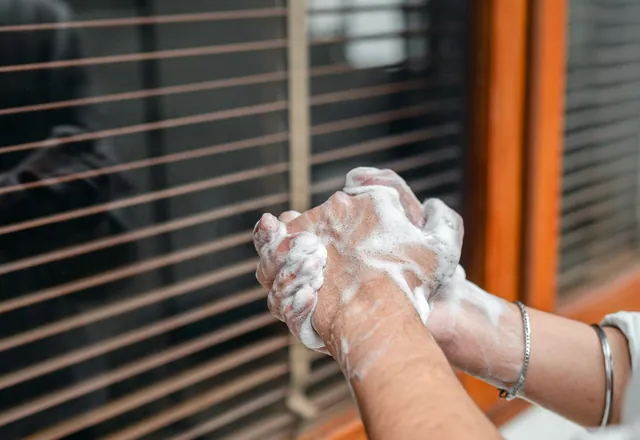
Wet your hands with clean running water, apply soap, and rub the surfaces thoroughly, including the backs, between fingers, and around nails. Scrub for at least twenty seconds, then rinse and dry with a clean towel or an air dryer. The water can be warm or cold; extremely hot water is unnecessary. The sequence is simple enough to repeat without buying a specialized household product.
A kitchen example shows why the moment matters. A person prepares vegetables, handles raw chicken, and then reaches for a ready-to-eat garnish. The transition between tasks calls for washing hands before touching the garnish. Gloves do not turn the same sequence into a safe one if the gloves carry material from one food to another. Keep hand care and the food preparation plan connected.
At home, place the drying towel where it can be used without touching unrelated dirty items. Change it when needed rather than treating a damp shared towel as permanently clean. In a public washroom, follow the available setup without inventing elaborate rituals. The priority is a thorough wash and suitable drying, not making every surrounding surface perfectly sterile.
When a sink is unavailable
An alcohol-based hand sanitizer with at least sixty percent alcohol can be an option when soap and water are not available. Check the label and use it as instructed over the hand surfaces until dry. Keep it away from flames and store it safely, especially around children. Hand sanitizer is for hands, not for drinking, food, or applying inside the body.
Soap and water are preferable when hands are visibly dirty or greasy, and sanitizer does not work equally well for every germ or contaminant. After a messy task, arrange a proper wash as soon as practical. If you are following specific infection-control instructions from a health professional or workplace, follow those instructions rather than assuming a general household routine is enough.
Solve the ordinary obstacle
If repeated washing irritates your skin, avoid making the water hotter or scrubbing harder in an attempt to compensate. Ask a clinician or pharmacist about suitable skin care if discomfort persists. You can also look at the environment: is there a mild soap, a gentle drying method, and room for any recommended moisturizer? Painful skin can make an otherwise simple routine difficult.
Choose one useful improvement this week. It might be refilling the soap before it runs out, placing supplies at a reachable height, or adding a handwashing step to the household's meal preparation routine. The habit does not require constant fear of germs. It requires noticing the moments when clean hands matter and making the response practical.