Use the plate as a sketch
A balanced plate offers a starting point when meal planning feels crowded with rules. Health Canada's food guide suggests roughly half vegetables and fruit, a quarter whole grains, and a quarter protein foods. These proportions are a visual framework, not a prescription for every person or meal. Your appetite, activity, culture, access to food, and any clinical nutrition needs still matter. Think about what a meal contains before trying to make its shape match an illustration.
Translate it into a bowl
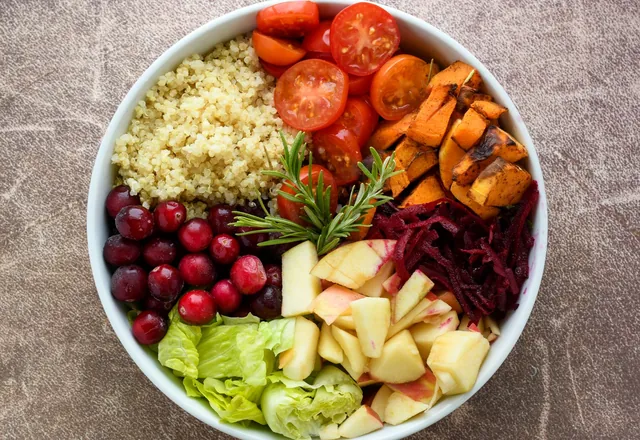
For a rice bowl, picture the ingredients before mixing them. Rice supplies the grain base, tofu or chicken supplies protein, and cabbage, carrots, and cucumbers bring produce. The bowl does not need separate compartments. A stew can work the same way: beans, vegetables, and a grain served alongside contribute different parts. If a dish is mostly pasta, adding mushrooms and white beans may be more useful than searching for a completely new recipe.
Let protein have a clear role
Choose a protein food you enjoy and know how to prepare. That might be lentils in soup, eggs with potatoes, fish with rice, or yogurt alongside a vegetable omelet. A garnish of a few beans may not feel as substantial as a generous scoop. Notice whether the meal carries you comfortably to your next eating opportunity. This is a practical observation about your own meal, not a test you pass by choosing the largest protein portion.
Give produce more than one format
Fresh salad is only one option. Frozen spinach can go into curry, canned tomatoes can start a sauce, and roasted carrots can sit beside a sandwich. Fruit can be dessert or part of the meal. If cutting vegetables is the barrier, choose pre-cut produce when affordable or wash enough for two meals at once. Keep an easy backup that survives a busy week, such as frozen peas, so a delayed shopping trip does not remove produce from the plan.
Include the ingredients that make food enjoyable
Oil, dressings, seeds, sauces, and seasonings help connect the parts. A lemon dressing can make chickpeas and greens inviting; peanut sauce can bring a noodle bowl together. A plate diagram is too simple to show every ingredient a satisfying dish uses. There is no need to interpret an unpictured ingredient as forbidden. Consider flavor, texture, and enough food alongside variety. A meal that looks balanced but leaves you hungry is an invitation to adjust it.
Build from your current dinner
Choose one familiar meal and make one addition. With pizza, add a vegetable side you like. With instant noodles, consider an egg and frozen vegetables. With a bean burrito, add cabbage or fruit. These examples keep the main dish recognizable. Changing everything at once makes it harder to learn what you actually enjoy. Check the fridge first so the addition uses something already available, and write down combinations that are both affordable and easy to repeat.
Keep the pattern flexible
Meals differ across a day and week. Breakfast may look nothing like dinner, and a celebration meal does not need reconstruction. Avoid using the plate to police someone else's food or to decide whether you deserve more. Children, pregnancy, athletic training, and medical conditions can require different planning. If a clinician has given you specific nutrition guidance, use that alongside the general framework. The useful question is what would make your next meal more varied, satisfying, and workable.
- For a grain bowl: a familiar grain, beans or tofu, cooked or raw vegetables, and a sauce you enjoy.
- For a sandwich meal: a substantial filling, a produce side, and enough food for your appetite.
- For a mixed stew: identify its components, then add a suitable accompaniment if the meal needs more substance.